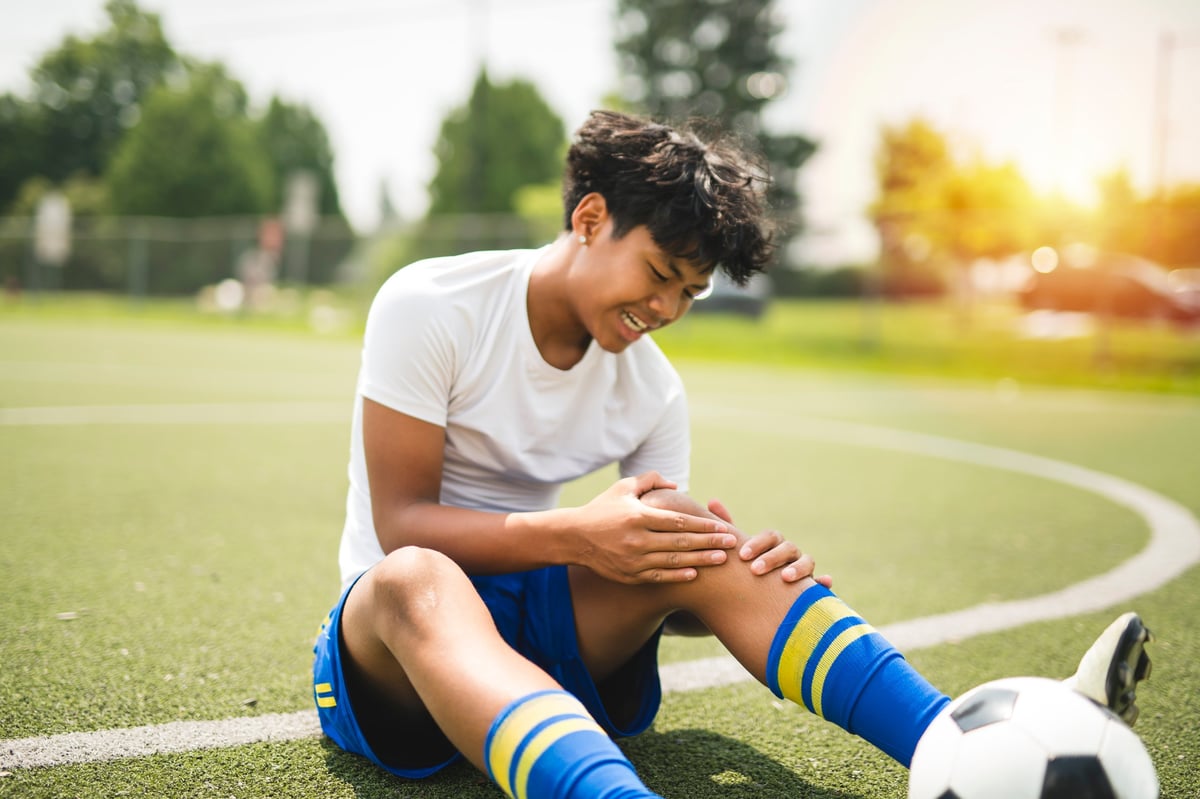
The ACL Epidemic: Why Female Players Are 5x More at Risk
Female footballers are up to 5 times more likely to suffer an ACL injury than their male counterparts. Discover the science behind this alarming disparity and what can be done to protect our female athletes.
🦵 The Hidden Crisis in Women's Football 🦵
Anterior Cruciate Ligament (ACL) injuries are devastating for any footballer. But for female players, the risk isn't just higher—it's alarmingly disproportionate. Research consistently shows that female athletes are 2 to 8 times more likely to suffer an ACL tear compared to males in the same sports.
Anatomical & Hormonal Factors
Wider Pelvis: Female athletes typically have a wider pelvis, which creates a greater angle (Q-angle) at the knee. This increased angle places more stress on the ACL during cutting, pivoting, and landing movements.
Hormonal Influences: Estrogen fluctuations throughout the menstrual cycle can affect ligament laxity and strength. Research suggests that ACL injury risk may increase during certain phases of the menstrual cycle when ligament flexibility is highest but strength is reduced.
Smaller ACL Size: Studies show that females typically have a smaller ACL relative to the size of the intercondylar notch, making it more susceptible to injury during dynamic movements.
Biomechanical Differences
Landings with Stiff Knees: Female athletes tend to land from jumps with less hip and knee flexion, creating a more upright position that increases stress on the ACL.
Greater Valgus Angle: The knee tends to collapse inward during landing and cutting movements in females, increasing strain on the ACL.
Hip Dominance vs. Knee Dominance: Many female athletes rely more on their quadriceps than their hamstrings for stability, while the opposite is true for males. Since hamstrings help protect the ACL, this imbalance is a significant risk factor.
Neuromuscular Control
During adolescence, girls often experience a decrease in neuromuscular control as they go through growth spurts. This "maladaptation" can lead to poor movement patterns that increase ACL injury risk—particularly during the critical period between ages 12-18 when most ACL injuries in female athletes occur.
The Numbers Don't Lie
Female soccer players sustain ACL injuries at rates 2-8 times higher than males. In youth sports, over 90% of ACL injuries are non-contact, occurring during sudden stops, landings, or changes in direction.
Prevention Is Possible: ACL Injury Prevention Programs
The good news? Research-backed prevention programs can reduce ACL injury risk by 50-80%. These programs focus on:
- Plyometric training – Learning to land softly with bent knees
- Strength training – Building hamstring and glute strength
- Agility drills – Improving hip and knee control during cutting movements
- Movement awareness – Training the body to maintain proper alignment
At Nou-Stars: Protecting Our Female Athletes
Our Development Phase programs incorporate comprehensive ACL injury prevention protocols. We believe in training smart, not just hard. Every female player deserves to play without fear of this devastating injury. That's why we prioritise proper movement patterns, strength development, and body awareness from an early age—giving our athletes the tools they need to stay on the pitch where they belong.